Tuesday, July 12, 2011

F.P. Victoria + Son Trade Tips: Pichon a Uzes


Above is a short video of Tony discussing Pichon pottery. Pichon à Uzes is a family owned factory founded in 1802 in the town of Uzes. The firm is still in business under Chirstophe Pichon, more information is available here:http://www.ceramique-pichon.com/ . In the video, Tony shares some examples of Pichon’s work from his own private collection as well as 2 pieces from our current inventory (http://www.fpvictoria.com/store/index.php/catalogsearch/result/?q=pichon&x=0&y=0)

What drew us to this potter was their wonderful mixed earth ceramics and use of color. Similar to the more well-known Apt ware (http://collections.vam.ac.uk/item/O256569/bowl-and-cover/), which is only about 100miles or so from Uzes in the south of France, Pichon combined different types of clay to create a “marbleized” look to the finished piece. Below is an example we owned previously of various cream, brown and red earths from about 1930.

It must be noted that this is fundamentally different from a marbleized or crystallized effect achieved through using different colored glazes. While no less beautiful, in that process colored glazes are applied to an existing, already fired, body of a single earth ceramic – similar to the idea of “painting” on a blank canvas. This is opposed to mixed earth ceramics, like from Pichon and Apt, in which the ceramic itself is made up of different types of earth. When you consider that each of the earths has a unique firing temperature, and the difficulty involved in successfully firing a whole piece, it is remarkable. An easy way to tell whether or not a ceramic is mixed earth is to examine any two sides of one section: if it is mixed earth, the interior and the exterior will both show the different earths, versus only the decorative glazing on the outside.

Pichon à Uzes is truly adept in their use of earths in their ceramics. While some earths, such as greens, whites, browns, and yellows, are more commonly found in mixed earth pottery, Pichon was able add blues and reds. Below is a wonderful example from about 1900.


Here is what we love about Pichon à Uzes:

  • A family owned firm with a long history
  • A less well known firm with remarkable products to discover
  • A technically challenging product to produce that reflects the skill involved in its making.
  • A beautiful result!

Thursday, June 2, 2011

An Old Holiday Card...

We had quite an exciting discovery last weekend - Tony found this old holiday card from Elsie de Wolfe to my grandfather, Frederick Victoria! It seems to be from 1950, and shows a super-imposed bust of Lady Mendl between her two dogs, all of which is supper-imposed on a, rather nice, marble mantel piece. Moreover, it confirms Elsie de Wolfe as a pioneer since she appears to have started photoshopping before the program even existed!

Tuesday, May 10, 2011

FP Victoria on Park Opening

Here are some photos from the opening evening at our pop-up installation at The Silver Peacock last week. The pop-up is a collaboration between FPV and The Silver Peacock, so most of the furniture you see is ours, while most of the objects and linens are from The Silver Peacock. With all the pieces we brought in and the abundance of items already there, the whole effort could have easily fallen into chaos. But we were very fortunate to have the talented Christopher Boshears's eye to style and edit the space so harmoniously - not an easy task!

We promise to post more images, and perhaps a video, of the space itself soon! In the meantime, please come by and visit it for yourself if you are in town. The Silver Peacock is located at 1110 Park Avenue, between 89th & 90th streets, 212.426.2610.


Charlie Akwa of The Silver Peacock, Christopher Boshears, Mary-Katherine Ryan, Todd Stein

Alex Papachristidis

Tony Victoria and Mary-Jane Pool, former editor-in-chief of House & Garden

Robert Kaner, James Andrew and Susan Victoria
Maureen Footer
Christopher Boshears
Freddy Victoria, Dennis Rolland, and Tony Victoria
Tony Victoria and Mel Dwork


Saturday, January 29, 2011

Louis XV Coiffeuse Armchair

We recently added this wonderful armchair to our available antique inventory. It's quite charming and rare - it had a specific use as well as being made later in the Louis XV period, as it was just beginning to transition into the Louis XVI style. So to highlight the unique character of this chair we are trying something new - a short video clip, similar to our Trade Tips, explaining briefly some of the chair's finer qualities in what we hope is a more engaging format.

Hope you enjoy it.

Monday, January 24, 2011

Winter Antiques Show Highlights

This is a bit hastily written, but last Thursday the 2011 Winter Antiques Show opened at the Park Avenue Armory and we wanted to share some highlights. Tony spent all day Wednesday there as chairman of the Decorative Arts vetting committee, and is in fact back there as I write this. Below are some of his favorite pieces which he snapped photos of with his camera phone - so I apologize for the quality of the images.

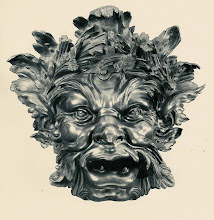
Here is a pair of fountain-head sculptural masks listed as being from Chateau du Fontainebleau in the booth of the London-based deal, Daniel Katz, Ltd. Wonderful detail. Reminded me of our own, latter, bronze mask that you may recognize as our main image on Facebook.

This is the booth of NYC-based dealer Jim Elkins and Lost City Arts. In the front center there is a great, rare sculpture by Paul Evans, from very early in his career.

This really speaks for itself. A striking late Art Deco French lounge chair in the booth of NYC-based dealer Carolle Thibaut-Pomerantz.

The show runs through January 30th.


Monday, January 10, 2011

Trade Tips 5: Upholstery Trim

Hope 2011 is of to a great start for you! Here is the second video clip in our 3-part series on upholstery. This short video covers the basic methods of upholstery trim. Enjoy!

Monday, January 3, 2011

Notes for 2011

The last few weeks of 2010, as I try and think about what we might expect from 2011, reading the headlines alternating between recovery and recession themed stories has been frustrating. For every legitimate story evidencing the nascent recovery, there is at least one or more that cause me to pause. Most recently, the holiday shopping period was generally considered successful and stronger than last year, but how much of this was due to steep discounting is hard to tell. Is this really a sign of economic strength or is it an illusion created by significantly reduced prices?

There are some encouraging metrics that support the recovery side of the debate. As of October, disposable income and personal consumption were both up slightly less than 4% year on year, and consumption of durable goods was up 8.5% year on year (according to the Bureau for Economic Analysis). All this while inflation is hovering around 1%. Consumers are also continuing to reduce their overall debt levels.

But on the negative side of the ledger, there is relatively high unemployment, which no one expects to substantially improve any time soon; relatively tight credit; and seemingly no pricing power. So we have something happening that intuitively is not what you’d typically expect: significant areas of weakness along with pockets of legitimate strength, sometimes in areas that you would expect to be dragged down by that same weakness.

Discounting has been especially interesting in the luxury market. Technology and mobile phones have made price information and comparison a reality and sites like Gilt and One Kings Lane have made high priced luxury goods available at bargain prices. Both of these trends have helped blur the line between luxury and ordinary. So if luxe and ordinary goods are closely priced, are mass market consumers “trading up” while luxe goods are “trading down”? I am betting that when anybody gets a luxe good at discount they still feel like they got a “deal” and value for their money.

That people are more careful with their money today is a foregone conclusion. But that does not mean they are not spending it. In fact, spending on “luxury goods” is at or above pre-Recession levels based on studies by American Express and Bain & Co (stories here: http://www.luxurydaily.com/luxury-sector-sales-rebound-to-historic-high-of-2007-bain/ and http://www.luxurydaily.com/luxury-spending-higher-than-pre-recession-levels-american-express/ )

So just like in the broader economy, we have a bifurcation taking place between strength and weakness, or in this case “true” luxury goods and discounted or mass market goods where luxury goods that can establish their authenticity and value actually have some degree of pricing power. The difference now is people need to understand the value behind a good versus the branded image it is trying to portray. More like an informed and discerning demand vs. conspicuous consumption.

When prices between luxury and ordinary goods are blurred and both high-end and mass market consumers are justifiably taking advantage of discount pricing, the way for a luxury good or service to set itself apart will be to clearly establish its superior quality and originality. If price does not set a luxury good or service apart from their mass market counterparts, then what does? The intense creative development process and an uncompromising attention to detail and quality.

Ironically, how companies convey this will be thru the same medium that this shift to quality is moving away from – the brand. However, instead of the superficial, carefully manufactured brand of the 1990’s, companies will need to let clients into the creative process so that they can see the brand is an accurate reflection of what the company produces. If you want to be associated with quality and authenticity, then clients need to see this in what goes into making their good and throughout their experience with you. Thankfully, the same technology that has made price comparison so easy makes other types of information also available, including information to help them discern luxury versus ordinary.

So, how are we preparing for 2011?

We plan to reinforce our attention to our clients and their experience with us from the first phone call or web visit, through development, and after their purchase or project is complete.

We plan to continue with introducing our own in-house line of limited edition pieces and signature items.

We will continue and broaden our efforts to illustrate to clients our development process and the craftsmanship and level of detail that we put into our pieces.